What 925 means on a piece of silver, and what it does not
Sterling is a recipe rather than a compliment: 92.5 per cent silver and something harder for the rest. What the stamp legally covers in the United States, why gold filled is not plating, and the three words that separate an honest description from a hopeful one.
The number is a recipe
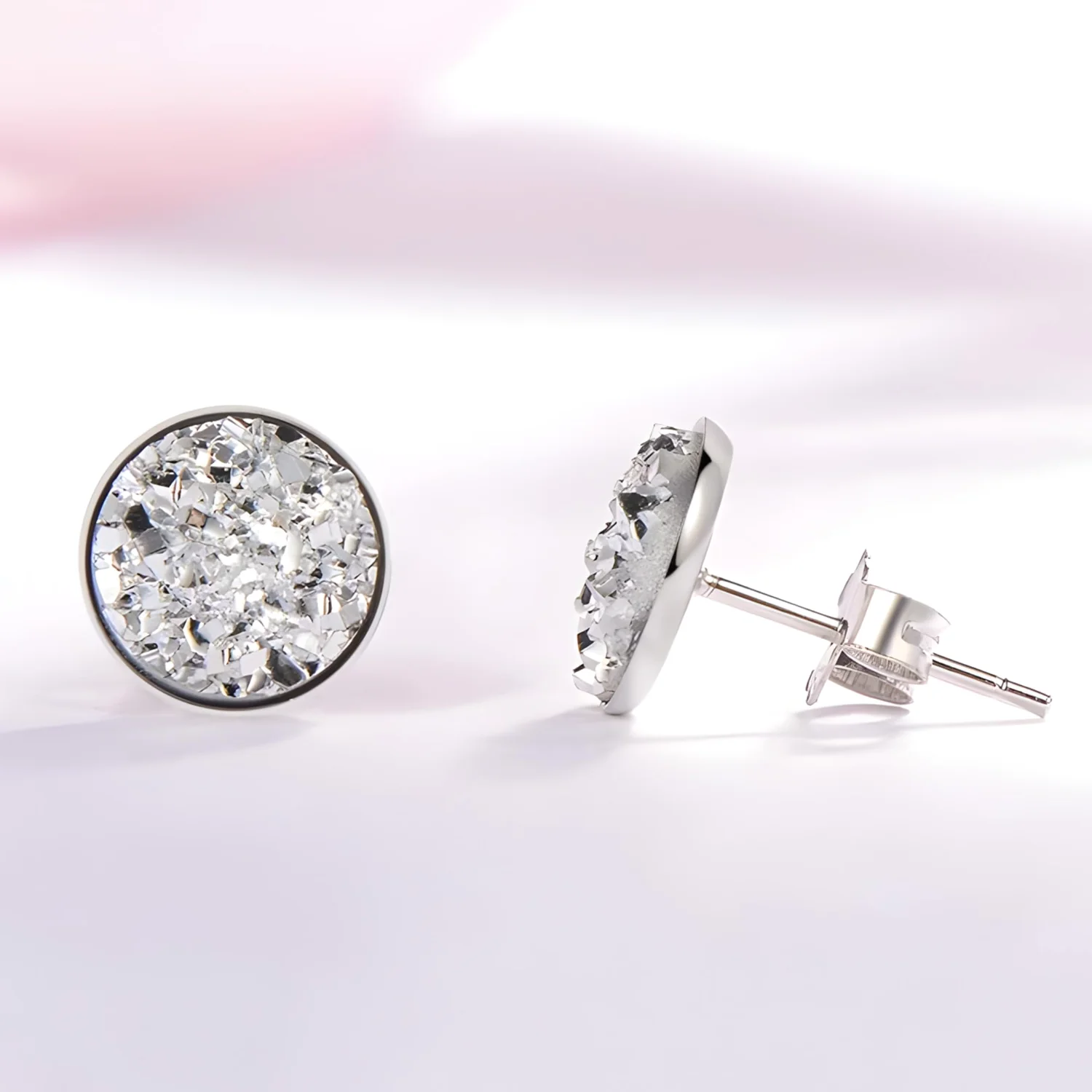
Small digits on a metal surface are a recipe, not a promise. The mark 925, or the words silver, sterling and sterling silver, indicate a composition that contains 92.5 parts per thousand of pure silver. The Federal Trade Commission's consumer guidance states this in plain terms. You can read 925 as 92.5 per cent pure silver in an alloy. The number covers only the metal content, not finishes or added layers. A 925 stamp does not describe whether the piece carries a surface coating, a plated finish, or a rhodium layer. The Guides for the Jewelry, Precious Metals, and Pewter Industries are codified at 16 CFR Part 23. Those rules set out what would be unfair or deceptive under Section 5 of the FTC Act. When a mark says 925 you have a clear signal about the silver content. The mark tells you nothing about a separate white plating or about a mechanically applied gold layer. In our catalogue, the studs, drops, pendants and bracelets are 925 sterling silver. You will find that fact stated where the product is listed. The cross pendant, by contrast, carries a plated white finish over sterling silver. Knowing the recipe is the first step. The second is reading what the maker or the page states beyond that number.
Why the other seven and a half per cent is there
Pure silver is soft. The remaining 7.5 per cent of a sterling alloy is a harder metal. That harder portion is what keeps a post straight and what lets a thin hoop hold its shape. The alloy does not change the silver content percentage. It does change mechanical behaviour. You will notice that a sterling post resists bending more than pure silver would. Silver also reacts with sulphur in the air and darkens. That darkening is a surface film, not wear of the underlying alloy. A film can appear uneven on textured surfaces and in crevices. The practical consequence is predictable. Jewelry pieces plated over sterling will show their surface layer first, while a clean 925 surface will develop a film. Our ball studs are 925 sterling and have a 10 millimetre post. Sizes are 3, 4, 5, 6, 8 and 10 millimetre for the ball heads. You can feel the difference between a heavy post and a finer one, and a 3.2 gram pendant on a fine chain behaves differently from a heavier one at the same length. Mass and handling are worth knowing before you buy, but neither changes the chemistry of the alloy beneath any finish.
Plated, filled, solid: three different objects
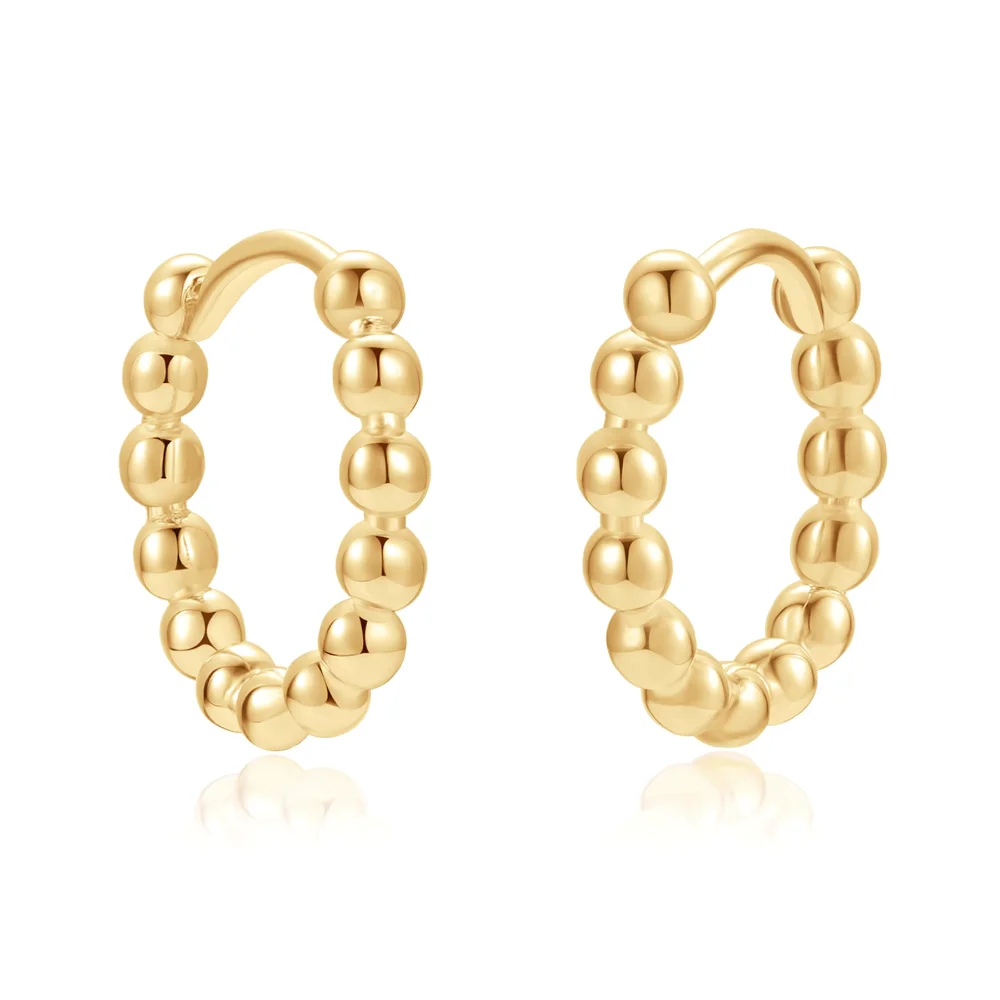
A visual match can hide three distinct constructions. Sterling silver is an alloy with 92.5 per cent pure silver throughout. Silver plate is a base metal with a thin layer of silver applied on top. Gold filled, gold overlay and rolled gold plate describe jewellery with a layer of at least 10 karat gold mechanically applied to a base metal. The FTC guidance treats those terms as distinct. Gold electroplate, by contrast, is a layer of at least 10 karat gold at least .175 microns thick applied by an electrolytic process. What wears depends on construction. If the visible material is a surface layer, that layer is what will show loss or wear first. If the visible material is the alloy itself, then your changes will be surface film and patina rather than loss of a plated layer. In our catalogue the huggie hoops are 14k gold filled. The cross pendant has a plated white finish over sterling silver. The stones used across pieces are cut cubic zirconia, including every birthstone colour. A page that describes any of these constructions must use the correct term. The Federal Trade Commission's Guides set out how those terms should be used and what would be unfair or deceptive practice under Section 5 of the FTC Act.
| Construction | What the metal actually is | What wears | What a page has to disclose |
|---|---|---|---|
| Sterling silver | An alloy containing 92.5 parts per thousand pure silver | Surface film from sulphur. The alloy remains | The words silver, sterling or sterling silver are used for products that contain 92.5 per cent pure silver |
| Silver plate | Base metal covered by a thin layer of silver | The plated layer wears first | Page must not misrepresent plated items as solid sterling |
| Gold filled | Base metal with mechanically applied layer of at least 10 karat gold | The applied gold layer is the visible surface that will wear | FTC guidance defines gold filled, gold overlay and rolled gold plate as having at least 10 karat gold mechanically applied |
The words a jeweller may use, and who decides
Regulation does the defining. The Federal Trade Commission issues the guidance that determines which descriptive words are permissible in the United States. Those Guides are codified at 16 CFR Part 23. When an item is described with the words silver, sterling or sterling silver those words mean the product contains 92.5 per cent pure silver. The same guidance states that gold filled, gold overlay and rolled gold plate describe jewellery with a layer of at least 10 karat gold mechanically applied to a base metal. Gold electroplate is defined separately as an electrolytic application of at least .175 microns of at least 10 karat gold. You can use those definitions when you read product text to check whether terminology is being applied correctly. The Guides also set out what would be unfair or deceptive under Section 5 of the FTC Act. One specific rule is 16 CFR section 23.7. That paragraph states that it is unfair or deceptive to fail to disclose a surface-layer application of rhodium on products marked or described as precious metal. A page that says merely that an item is precious metal but omits a plated rhodium layer can therefore be misleading under that rule. The practical effect is simple. Text must match construction. Either the correct term or the composition itself belongs on the page.
Where the stamp is, and why a small stud often has none
Marks appear where there is room to put them. On a pendant the stamp is often on the bail or on a hidden flat. For hoops and bracelets the mark might sit inside the band. You can check posts and backings on small studs. Our ball studs are 925 sterling and have a 10 millimetre post where a mark can be applied legibly. A very small element may have no visible hallmark simply because there is not an accessible, durable spot to accept the mark and keep it readable. When there is a plated finish over a sterling base the plating may obscure any tiny mark until it wears. The cross pendant in our range carries a plated white finish over sterling silver, and therefore a stamp on the underlying metal can be present but not obvious at a glance. Weight and chain measurements are sometimes useful cues. The cross pendant weighs 3.2 grams and comes on a 17.7 inch chain with a 2 inch extender. You can look for those numbers where the page supplies them. If a small piece lacks a visible stamp you can still look for explicit composition language such as 925, 92.5 per cent, or a statement that the item is gold filled or plated. That language is what tells you about construction when the physical mark is too small to find.
Reading a description that never says sterling
A page that omits the word sterling can still tell you what you need to know. Look for numeric cues. The mark 925 or the phrase 92.5 per cent pure silver is the same signal the FTC guidance uses to define sterling. If the text says gold filled, gold overlay, or rolled gold plate you can read that as a mechanically applied layer of at least 10 karat gold over a base metal. If the term gold electroplate appears, the guidance defines that as an electrolytic gold layer at least .175 microns thick of at least 10 karat gold. Statements about the finish are worth as much attention as the metal. The Guides require disclosure in certain cases. For example, 16 CFR section 23.7 makes it unfair or deceptive to fail to disclose a rhodium surface-layer application on an item described as precious metal. In our catalogue certain pieces state their construction directly. The studs, drops, pendants and bracelets are 925 sterling silver. The huggie hoops are 14k gold filled. The cross pendant carries a plated white finish over sterling silver. Stones are cubic zirconia in every birthstone colour. When a page never uses the word sterling, read the composition statements and the numeric marks. That will tell you whether the piece is solid alloy throughout, an applied gold layer, or a plated finish over a sterling base.
More like this is in Silver Notes, and the EVERU studio keeps the whole range one click away on the front page.